Lighting 101: How to Layer Light Like a Designer
This post contains affiliate links. If you purchase through them, I may earn a small commission at no extra cost to you.
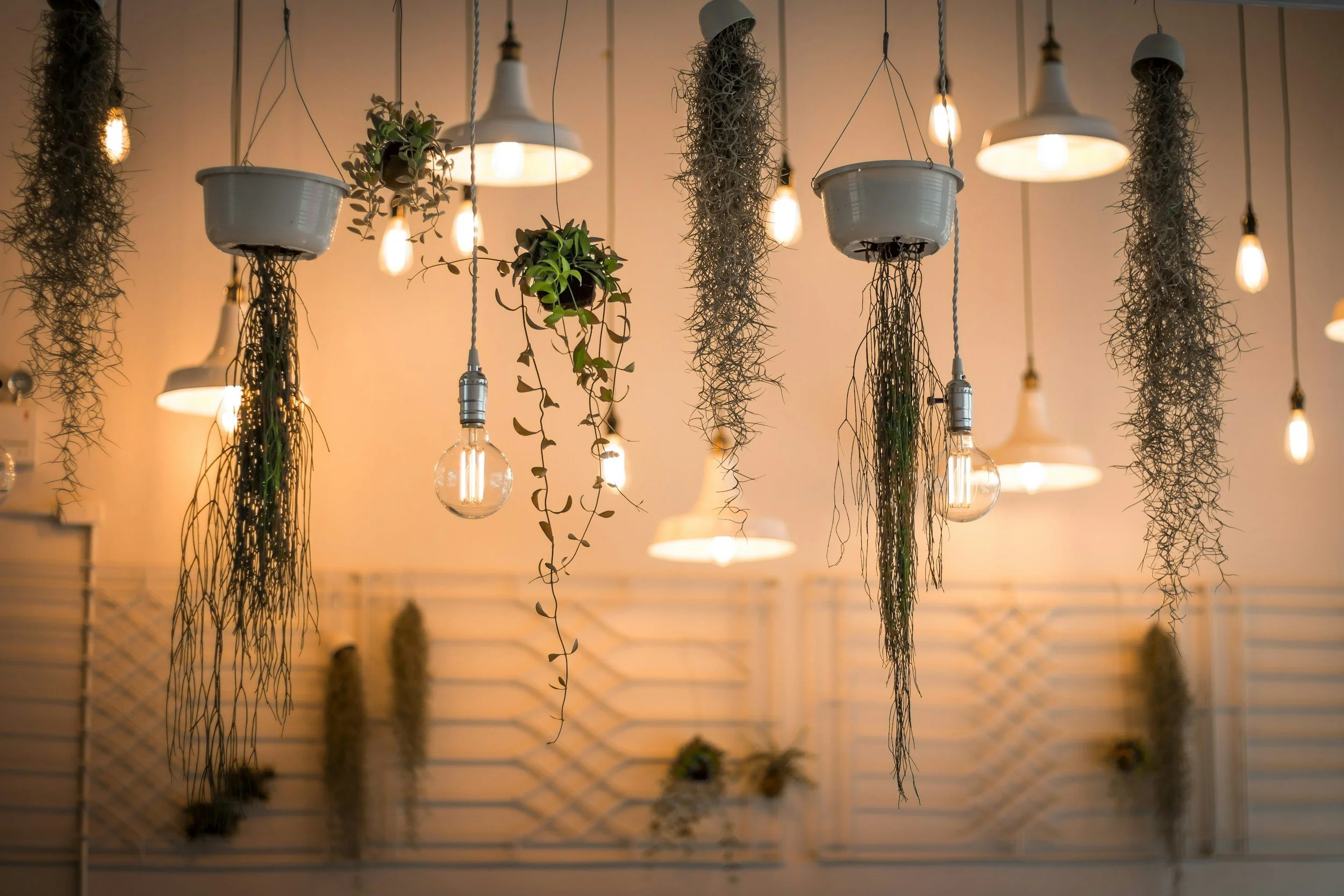
If a room feels flat, dim, or somehow unfinished despite having furniture you love and colors that work, lighting is almost always the culprit. It's the element people tend to address last and budget least for, and it's the one that affects everything else.
The difference between a room that looks like a waiting room and one that feels like a home isn't always the quality of the furniture or the paint color. It's usually the quality of the light. Specifically, whether there are multiple sources of light working together or just one overhead fixture doing its best and falling short.
Layering light is one of the first things I address in any design project, and it's one of the most accessible things a homeowner can implement without a full renovation. Here's how it works and how to apply it in your own home.
What layered lighting actually means
Layered lighting is the practice of using multiple light sources at different heights and with different purposes in the same room. Rather than relying on a single overhead fixture to handle all the work, you're building a lighting environment where different sources come on and off depending on what the room needs to do at a given moment.
There are three layers to work with: ambient (your overall illumination), task (light directed at specific activities), and accent (light used to highlight architecture, objects, or texture). A room that has all three feels dimensional and flexible. A room that has only ambient light, which is most rooms, tends to feel flat and institutional regardless of how well everything else is designed.
The goal isn't complexity for its own sake. It's flexibility. A living room that can shift from bright and functional during the day to warm and intimate in the evening is more livable than one that's stuck at one setting. That flexibility comes from having multiple layers you can control independently.
Layer 1: Ambient lighting
Ambient light is your base layer. It's the general illumination that allows you to see the whole room and move through it safely. Most homes have this covered, but often in a way that creates more problems than it solves: a single central ceiling fixture that casts harsh, flat light with unflattering shadows on everything below it.
The fix isn't necessarily to remove the overhead fixture, though sometimes it is. It's to avoid relying on it as the only source. When ambient light comes from multiple points rather than one, it distributes more evenly and creates far fewer harsh shadows. Recessed lighting in a grid, two or three flush mounts in a larger room, or a combination of a ceiling fixture and wall sources all achieve better ambient light than one central fixture working alone.
For ambient sources, I look for fixtures that feel like design decisions, not just functional necessities. A well-chosen flush mount or a chandelier contributes to a room even when it's off. The same is true of pendants in kitchens and dining rooms, where scale and proportion matter as much as the quality of light they produce.
On bulb temperature: For residential spaces, I almost always specify bulbs in the 2700K to 3000K range. That's the warm white end of the spectrum, closer to incandescent light than daylight. Cooler bulbs (4000K and above) tend to make rooms feel clinical and wash out warm-toned finishes. If your space feels cold even with good fixtures, check your bulbs first.
Layer 2: Task lighting
Task lighting is exactly what it sounds like: light directed at a specific activity. Reading, cooking, working, applying makeup. The common thread is that these activities require more focused illumination than ambient light can provide, and trying to do them under general room light usually means straining.
In kitchens, the most common task lighting gap is under-cabinet lighting. Overhead ambient light, whether recessed or pendant, typically falls on the counter from above and slightly behind the person working there, putting the work surface in their own shadow. Under-cabinet lighting solves this completely, and it's one of the most practical additions you can make to an existing kitchen.
In bathrooms, vanity lighting is the task layer, and it's one of the most commonly done wrong. Side-mounted vanity fixtures at face height provide even illumination without the unflattering shadows that overhead-only bathroom lighting creates. If your bathroom mirror is lit only from above, that's worth addressing.
In living rooms and bedrooms, table lamps and floor lamps serve the task function, and they do double duty: they provide reading light and they're objects in their own right. The lamp is part of the composition. This is why scale and silhouette matter when selecting them.
A note on scale: Table lamps in particular are often selected too small. A lamp that looks fine in a showroom can disappear on a console or beside a sofa. The shade should be roughly at eye level when you're seated, which usually means looking for lamps taller than you'd initially think.
Layer 3: Accent lighting
Accent lighting is the layer most people skip, and it's the one that makes the biggest difference between a room that looks professionally designed and one that looks like a nicely furnished space that isn't quite finished.
The purpose of accent light is to give the eye somewhere interesting to go. In a room where everything is lit to the same level, nothing stands out and the space reads as flat. Accent lighting creates depth and hierarchy by making certain things brighter than their surroundings: artwork, architectural details, textured surfaces, bookshelves, plants.
A picture light above a piece of art draws the eye to it and gives it the visual weight it deserves. Directional spots or adjustable sconces can highlight architectural details like a fireplace surround or an interesting ceiling feature. LED strip lighting inside built-ins or on open shelves makes the objects on them feel curated rather than just stored. Grazing light across a textured wall brings out the surface in a way that no other technique can.
For artwork specifically, picture lights and directional art lighting are worth investing in properly. Art that's lit well reads as intentional and valued. Art that's lit only by ambient room light can look like it was hung and then forgotten.
Start small: You don't need to add accent lighting everywhere at once. Identify the one or two things in a room that deserve more visual attention and light those first. Even a single picture light or a pair of sconces flanking a fireplace can shift how an entire room reads.
Putting it all together: the practical part
The single most important practical decision in any lighting plan is also one of the most overlooked: dimmers. Every layer of lighting in a room should ideally be on a separate dimmer circuit. This is what gives you the flexibility to shift the room from bright and functional to warm and ambient by adjusting the balance between layers rather than just turning things on and off.
If you're doing any electrical work, adding dimmers is one of the highest-value upgrades per dollar you can make. If you're working with existing wiring and can't rewire, smart bulbs with dimming capability are a reasonable workaround for fixtures that don't currently have dimmer switches.
The other principle worth applying consistently is varying the height of your light sources. A room where all the light comes from the ceiling feels very different from one where light comes from the ceiling, from table height, and from closer to the floor via floor lamps. The variation in height creates a more natural, layered quality that reads as warmth and depth even when you can't specifically identify why the room feels better.
As a starting checklist for any room you're evaluating:
Is there ambient light that doesn't rely on a single central source?
Is task lighting present wherever a specific activity happens regularly?
Is there at least one accent light drawing the eye to something worth looking at?
Are the sources at varying heights rather than all at ceiling level?
Are bulbs in the warm white range (2700K to 3000K)?
Is there dimming capability on at least the main ambient layer?
A room that can answer yes to most of these will feel significantly different from one that can't, regardless of what else is in it.
Lighting is the most forgiving element to change.
Unlike layout or finishes, lighting can be added to, adjusted, and improved in an existing room without major construction. A table lamp here, a dimmer there, a picture light above something you love. The changes are cumulative and the effect is immediate.
If you're working through a room that isn't feeling the way you want it to and you're not sure where to start, lighting is almost always the first place I'd look. And if you'd like a professional eye on it, that's exactly what virtual design is for.
SHOP THIS POST
Everything linked is something I'd genuinely recommend. Affiliate links help support this blog at no extra cost to you.
Ambient Lighting
Flush mounts: Shop flush mounts versatile for smaller rooms and hallways
Chandeliers: Shop chandeliers statement ambient for dining and entry
Pendants: Shop pendants kitchen, dining, and task-ambient hybrid
Task Lighting
Under-cabinet lighting: Shop under-cabinet lights the most impactful kitchen upgrade
Vanity and bath lighting: Shop vanity lights side-mounted for even face illumination
Table lamps: Shop table lamps living room and bedside task light
Floor lamps: Shop floor lamps reading and layered ambient in one
Accent Lighting
Picture lights: Shop picture lights elevates artwork immediately
Wall sconces: Shop sconces architectural detail and accent combined
Art and directional lighting: Shop art lighting for galleries, collections, focal walls
Texture and graze lighting: Shop texture lights brings out wall and surface detail
Built-in and shelf lighting: Shop built-in lighting LED strip for shelving and cabinetry
Controls
Dimmers: Shop dimmers the single highest-value lighting upgrade
Varying-height lamp sources: Shop layered lighting floor and table lamps for height variation