Small Bedroom Layout Tips That Actually Work
This post contains affiliate links. If you purchase through them, I may earn a small commission at no extra cost to you.
Small bedrooms are one of the most common design challenges I work through with clients, and also one of the most misunderstood. Most people approach them as a storage problem. How do I fit everything in? Where does the dresser go? Can I still have a nightstand?
But the real question isn't about fitting things in. It's about making the room feel good to be in. A small bedroom that's laid out well feels calm, functional, and restful. A small bedroom that's laid out poorly feels cramped and stressful regardless of how nice the furniture is.
The good news is that most small bedroom layout issues come down to a handful of repeatable principles. Once you understand them, they're not that hard to apply. Here's what I actually tell clients.
Float the Bed When Possible
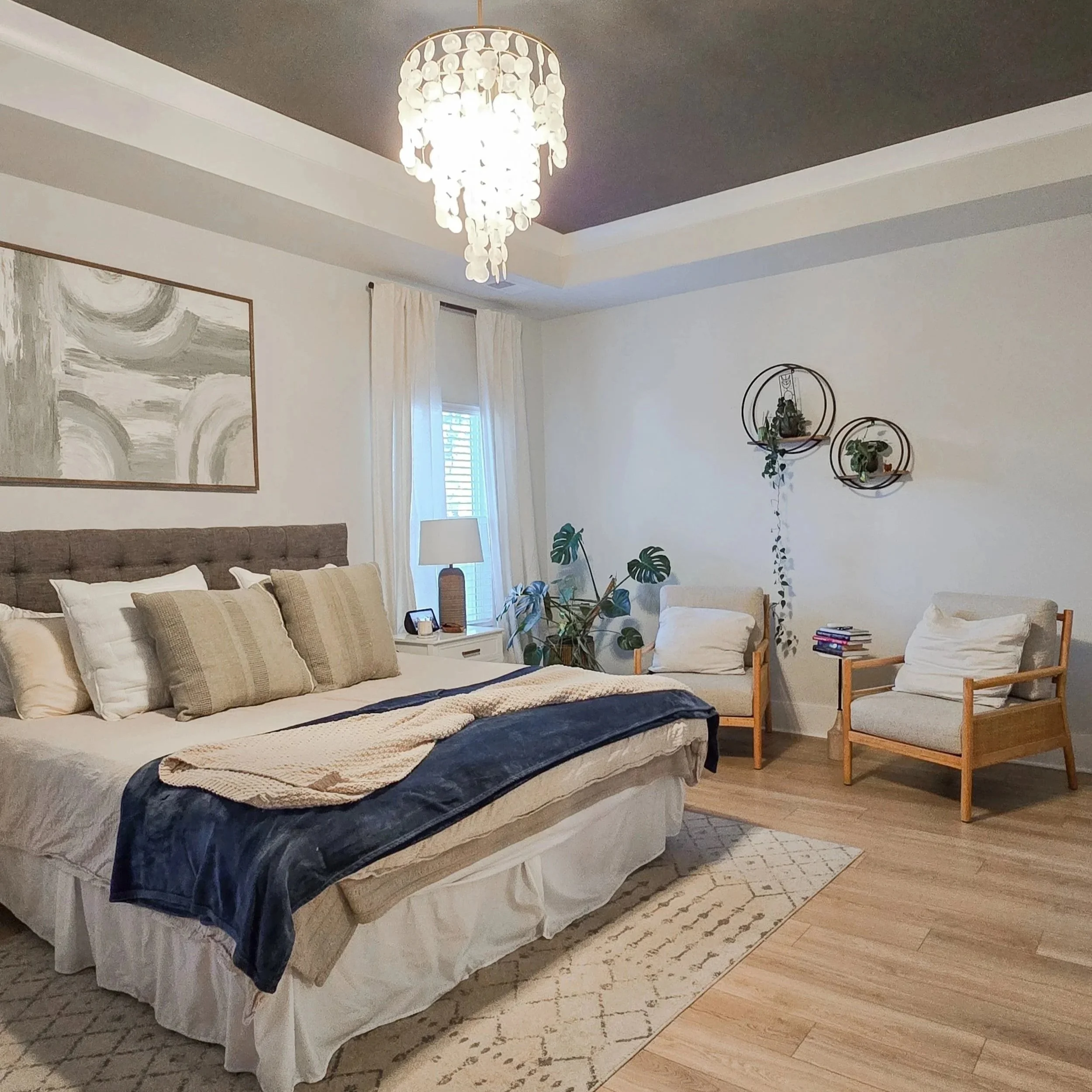
The single most impactful layout decision in a small bedroom is where the bed sits relative to the walls. The instinct is usually to push it into a corner or flush against a wall to save space. I'd encourage you to resist that instinct in most cases.
Floating the bed, meaning pulling it away from the side walls so there's walking clearance on at least two sides, creates symmetry and improves how the room feels to move through. A room where you have to climb over the bed to get to one side feels smaller than it is, even if the square footage is identical to one where you can walk around it freely.
The minimum clearance I work with on each walkable side is around 24 inches. That's enough to open drawers, make the bed without gymnastics, and move through the room without feeling squeezed. If you can get to 30 inches, even better.
Architect's note: Centering the bed on the main wall also creates a natural anchor for the room and makes it much easier to design the rest of the layout around it. It's the decision that makes everything else feel more intentional.
If you're working with a genuinely tight room and a full or queen bed, it's worth considering whether the bed frame itself is adding unnecessary bulk. A low-profile platform bed or a frame without a footboard can recover several visual inches and make the same footprint feel more open.
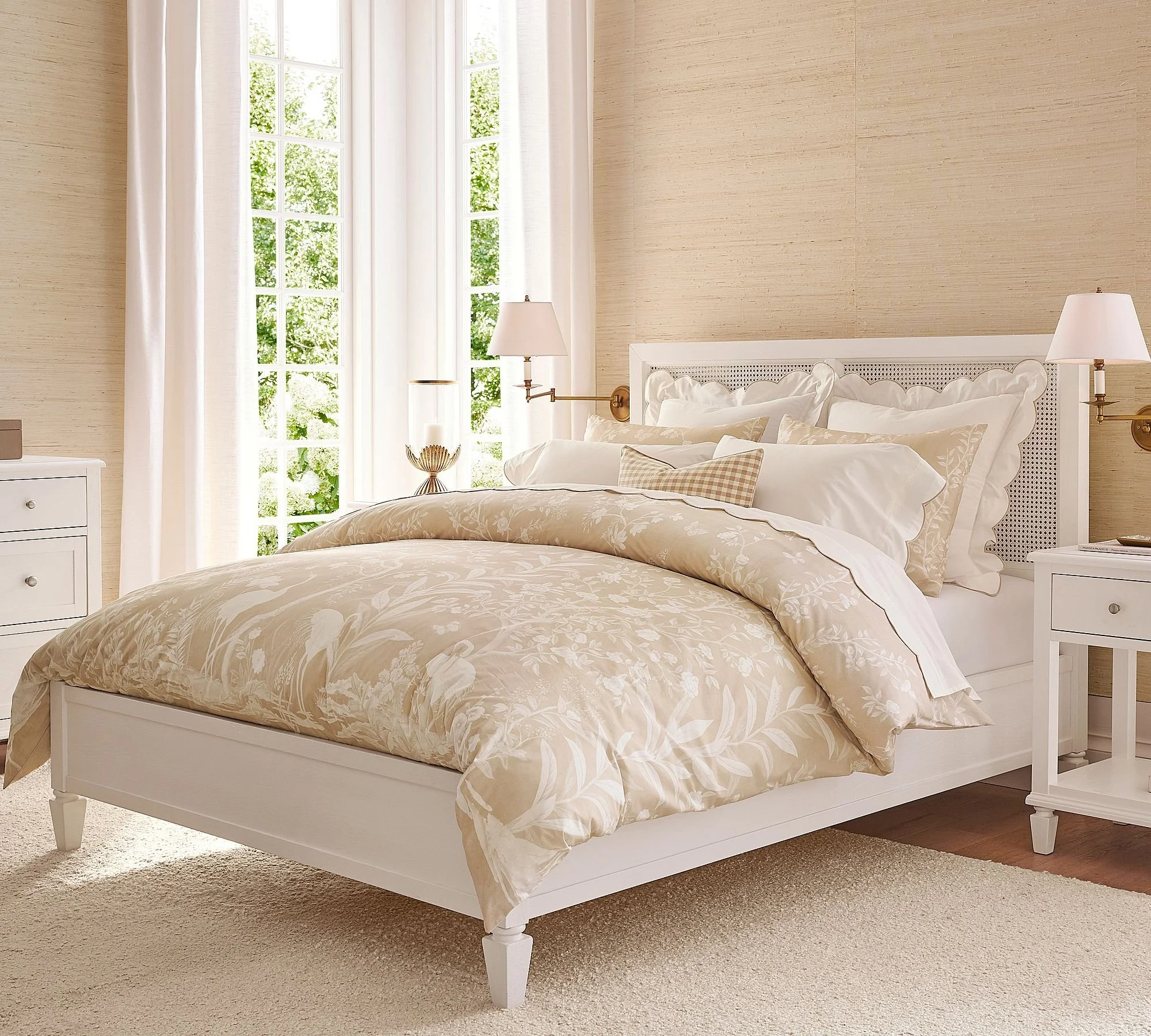
Nightstands in small bedrooms serve two purposes: surface space and lamp placement. The problem is that a standard table lamp takes up a significant portion of a small nightstand's surface, leaving barely enough room for a glass of water and your phone.
Wall-mounted sconces solve this completely. Moving the light source to the wall frees the entire nightstand surface for actual use, and it also improves the visual proportion of the room. Bedside lamps sitting on small nightstands can look a bit precarious and visually heavy. Sconces feel intentional and architectural.
The height matters. I position bedside sconces so the bottom of the shade or the light source sits roughly at shoulder height when you're sitting up in bed. That puts the light where it's actually useful for reading without shining directly in your eyes.
Practical note: Hardwired sconces look the cleanest but require an electrician. Plug-in sconces have come a long way in design quality and are a completely viable option, especially in a rental or if you're not ready to open walls.
Wall sconces I recommend for small bedrooms: shop the look — works well in tight spaces without overwhelming the wall.
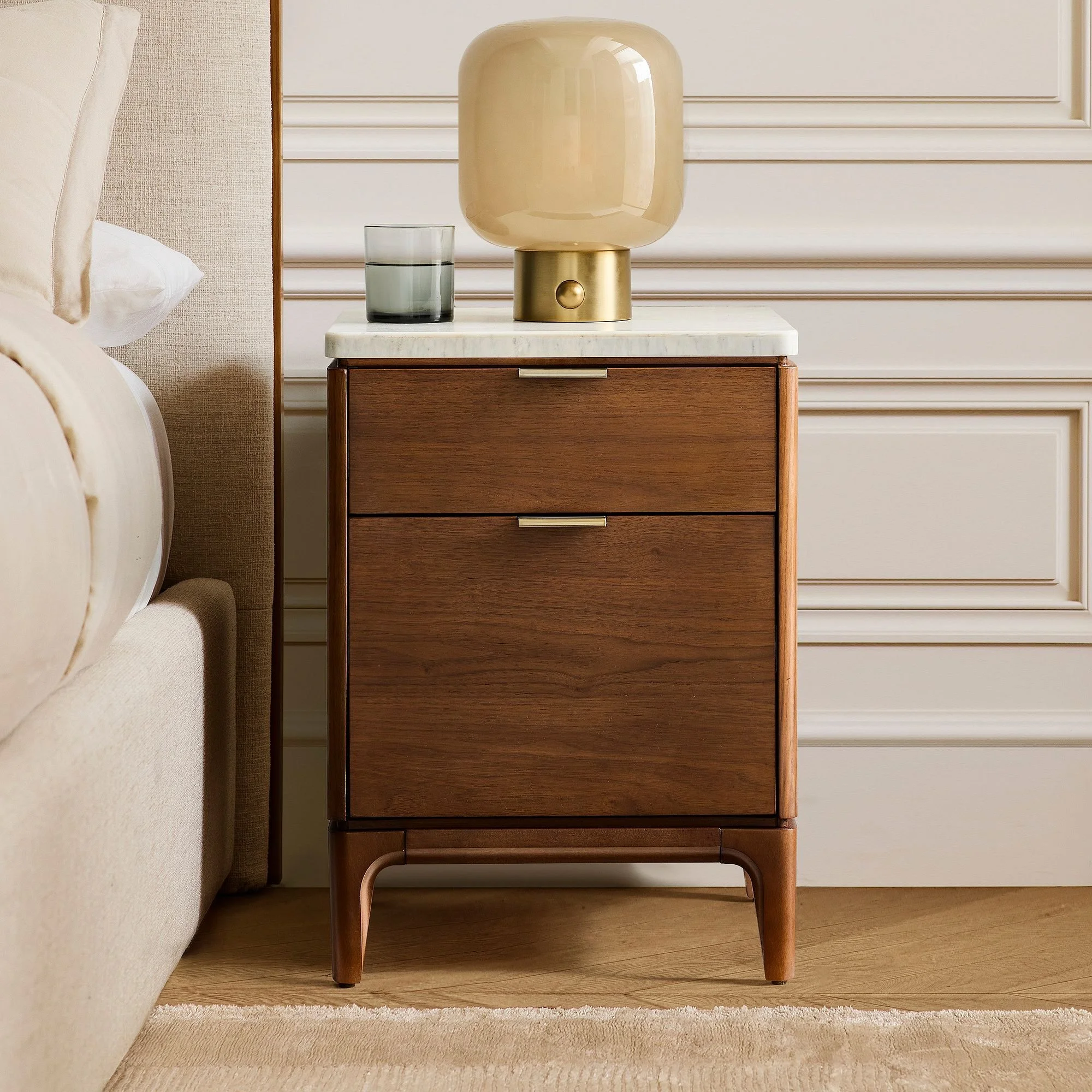
Scale is everything in a small bedroom, and nothing throws off the scale of a small room faster than oversized furniture. A nightstand that's the right size for a large primary suite will look and feel enormous next to a full bed in a 10x10 room.
When I'm selecting nightstands for a smaller bedroom, I'm looking for a few things. First, the height should be close to the mattress height, within a couple of inches either way. Second, the width should feel proportionate to the bed, not competing with it for visual attention. Third, I'm thinking about what the nightstand needs to do. If it just needs to hold a lamp and a phone, a small surface and maybe one drawer is enough. If it's doing double duty as a storage piece, a cabinet-style nightstand might make more sense than a separate dresser.
One thing that often surprises people: a nightstand with legs reads as lighter and less bulky than one that goes to the floor, even if they're the same size. The visual breathing room underneath makes a difference.
Architect's note: In very tight rooms where there's no space for nightstands at all, consider a wall-mounted shelf at nightstand height. A few inches of depth is enough to hold what you need, and it takes up zero floor space.
The compact nightstand I recommend most: shop it here — streamlined proportions that work in smaller spaces.
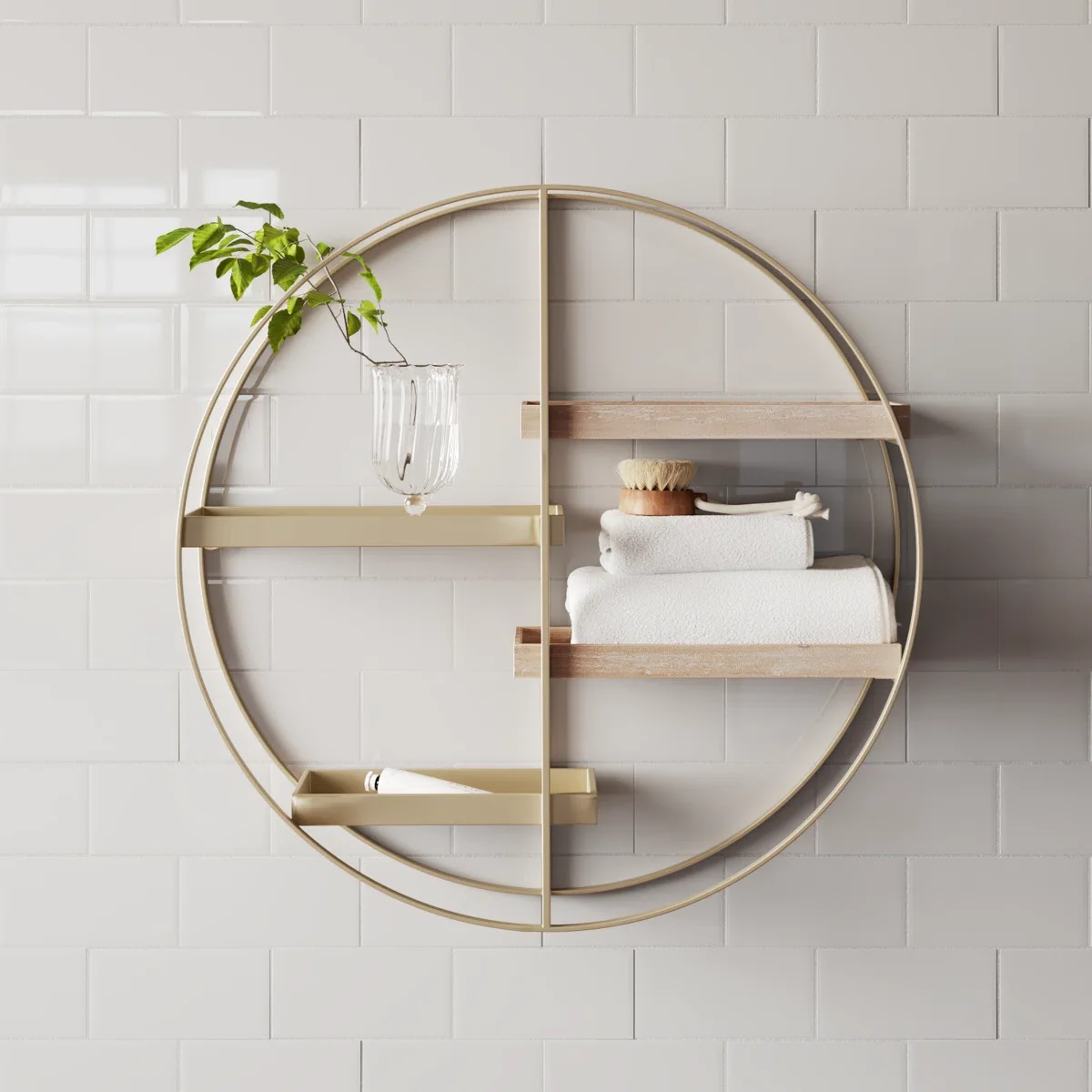
Floor space is finite in a small bedroom. Wall space almost always has more room to give. Shifting your storage thinking from horizontal to vertical is one of the most effective layout moves you can make.
A tall, narrow dresser takes up far less floor space than a wide, low one while often offering comparable or greater storage. A wall shelf above the door or running along the upper portion of a wall adds storage without touching the floor at all. Hooks on the back of the door handle things like bags, robes, and tomorrow's outfit without requiring a single square foot of floor area.
The key is to keep vertical storage feeling intentional rather than improvised. Matching storage pieces, even simple ones, look deliberate. A collection of mismatched shelves and hooks added over time tends to make a small room feel more cluttered than it is.
A tall dresser in the 48 to 60-inch height range is often more efficient than a wide one.
Open shelving works well in small bedrooms if it's kept edited. A few objects and books feel curated. A fully packed shelf feels chaotic.
Built-ins around a window or flanking the bed are the ultimate vertical storage solution, and they also make a small bedroom feel genuinely custom.
Vertical storage I like for small bedrooms: shop wall shelves — maximize wall space without touching the floor.
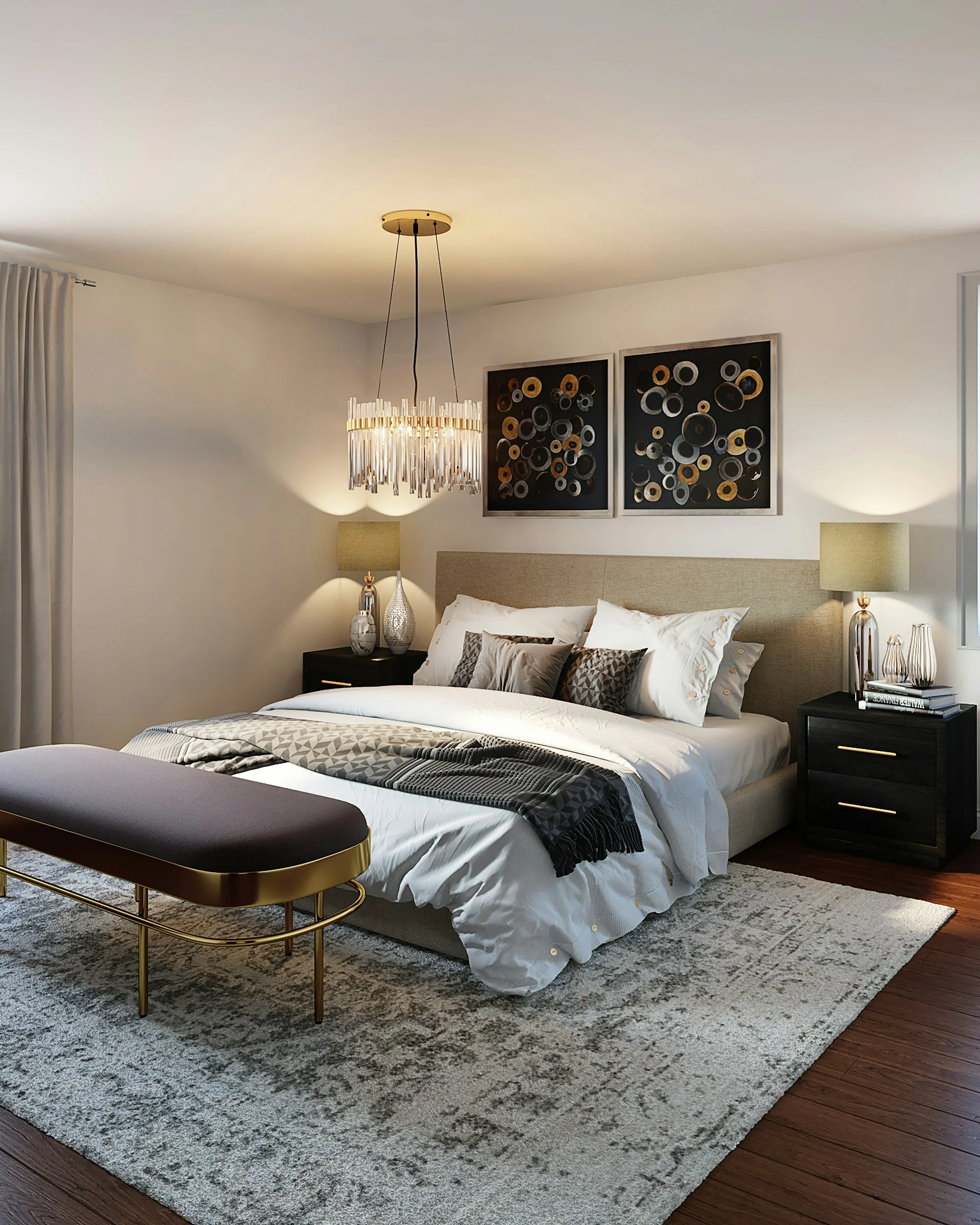
Use a rug to define and anchor the space
A rug in a small bedroom does two things at once: it adds warmth and softness underfoot, and it visually defines the sleeping zone in a way that makes the room feel more intentional and complete.
The most common rug mistake in small bedrooms is going too small. A rug that only sits under the bed frame looks like an afterthought. The standard I use is that the rug should extend at least 18 to 24 inches beyond each side of the bed, so there's something soft to step onto when you get up in the morning.
In a genuinely small room, a 5x8 or 6x9 is usually the right range depending on bed size. If the room truly can't accommodate that, a runner on each side of the bed is a workable alternative that still gives you that soft landing without requiring the full footprint.
On color and pattern: In a small bedroom, a lighter rug will make the room feel more open. A heavily patterned rug can feel busy in a tight space. A simple texture or subtle pattern tends to work best and lets the other elements in the room breathe.
* * *
Small bedrooms reward intentional decisions.
None of these principles require a renovation or a big budget. Most of them are about placement, proportion, and the kinds of choices you make when you're buying furniture. Getting those things right in a small room makes a bigger difference than almost any finish upgrade you could make.
If you're working through a small bedroom layout and want a second set of eyes, that's exactly the kind of thing we work through in a virtual design session. You can learn more and get started here.
Destiny Hall, Architect & Interior Designer, Hall & Home
SHOP THIS POST
Everything linked is something I'd genuinely recommend to a client. Affiliate links help support this blog at no extra cost to you.
Beds & Frames
Low-profile bed frame: Shop the frame keeps the room feeling open and grounded
Lighting
Bedside wall sconces: Shop sconces frees up nightstand surface, improves proportion
Nightstands
Compact nightstand: Shop nightstands scaled for smaller rooms without sacrificing storage
Storage
Wall shelving: Shop wall shelves vertical storage that doesn't touch the floor