How Virtual Interior Design Works: A Step-by-Step Guide From an Architect
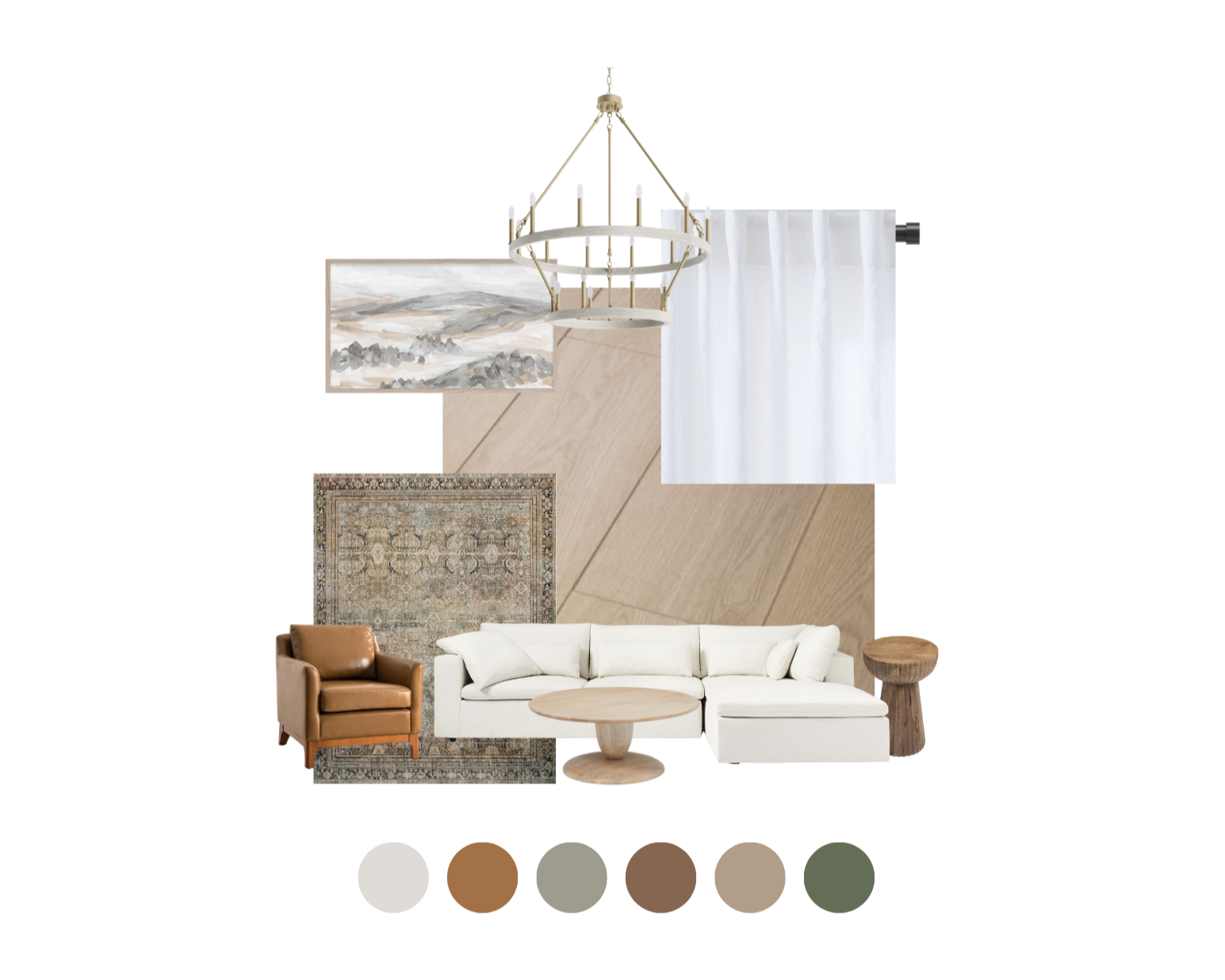
If you've been thinking about working with an interior designer but aren't sure virtual design can really work, you're not alone. The questions I hear most often are some version of: will it actually feel personalized, or will I just get a generic mood board and a shopping list I have to figure out on my own?
It's a fair concern. There's a lot of online design services out there, and a lot of them do hand you a PDF and wish you luck. That's not what this is.
What makes Hall & Home's virtual design process different is that it's built on an architectural foundation. Before we talk about furniture or finishes, we talk about space. How it's laid out. How you move through it. What it needs to do. That structure is what separates a room that looks good in photos from one that actually works for the people living in it.
Here's exactly how the process works, from first conversation to finished room.
Step 1: We start with how you actually live
Every project starts with a conversation, not about style, but about life. Before I look at a single inspiration image or consider a single furniture option, I want to understand what's happening in the space right now and what you need it to do differently.
This means asking questions that might feel obvious but rarely get asked: Who uses this room and when? What frustrates you about it most? Do you entertain in it, or is it mostly for your household? Do you need it to feel energizing or calming? Is there something about it you've always wanted but never felt confident enough to try?
These answers shape everything that comes after. A home office that needs to double as a guest room is a completely different design problem than one that only needs to function as a workspace. A living room for a family with young children needs to be solved differently than one for a couple who mostly uses it for quiet evenings. Design that doesn't account for these differences ends up looking fine but feeling wrong.
Why this matters: Most design frustration comes not from bad taste but from solutions that were never specific to the problem. Starting here means everything downstream is built around your actual life, not a hypothetical one.
Step 2: Measuring and documenting the space
Once I understand how you live, I need to understand the space itself. You'll provide room dimensions, ceiling height, photographs from multiple angles, and information about any existing furniture you're keeping.
This step is more important than most people realize. A significant portion of DIY design frustration comes down to proportion errors: a sofa that looked right online but overwhelms the room, a rug that seemed like a reasonable size but leaves too much bare floor, a furniture arrangement that blocks a door or creates a traffic jam between the kitchen and the dining table.
Accurate documentation prevents all of that. When I'm working from real dimensions rather than approximations, the layout I create will actually fit the space, with the right clearances, the right flow, and furniture sized correctly for the room it's going into.
What to send: Room dimensions (length, width, and ceiling height), photos from each corner of the room, and the location of doors, windows, and any fixed features like built-ins or radiators. The more complete the documentation, the more precise the plan.
Step 3: Space planning before anything else
This is where the architect in me takes over, and it's the step that most online design services skip entirely.
Before we talk about what anything looks like, we figure out where everything goes. You receive a scaled furniture plan showing the proposed layout, how the pieces relate to each other, how circulation flows through the room, and where the natural focal points are.
A good layout is the foundation that makes everything else work. It's what determines whether a room feels open or cramped, whether conversation areas feel connected or awkward, whether the room has a natural hierarchy or just a collection of furniture with nowhere in particular to look. Getting the layout right first means that when we do move on to finishes and furnishings, every decision we make has a solid spatial logic underneath it.
This is also the stage where I catch problems that wouldn't show up until delivery day: the dresser that would block the closet door, the sectional that would overwhelm the room, the dining table that seats six but leaves no room to pull the chairs out.
Step 4: Concept direction and visual identity
With the layout settled, we move into the part most people picture when they think of interior design: the look and feel of the space.
You receive a curated concept board showing the overall direction, a color palette, and material and texture guidance. Every element on that board is there for a reason and connects back to what you told me in Step 1. The palette isn't just colors I happen to like. It's colors that suit your light conditions, work with what you're keeping, and align with the mood you described wanting.
This is also where I'll flag any decisions that are worth splurging on versus areas where a more budget-conscious choice makes complete sense. Not every piece in a room needs to be an investment. But some do, and it's worth knowing which ones before you start buying.
On cohesion: The most common thing I see in rooms that feel unfinished is not a lack of nice things. It's a lack of a unifying idea. Individual pieces might be beautiful, but they're not in conversation with each other. The concept stage is what prevents that.
Step 5: A fully shoppable design plan
This is where everything comes together in a form you can actually use. You receive a complete furniture and furnishings list with direct shopping links for every item, sized and specified for your exact space.
The plan covers furniture placement, lighting selections, rug sizing (one of the most common places people go wrong), and styling accessories depending on the scope of the project. Everything is linked so you can purchase at your own pace, in whatever order makes sense for your budget and timeline.
I build these plans with a mix of price points, because good design doesn't require spending the same amount on everything. An investment sofa can sit alongside a more accessible side table. A splurge on hardware can be balanced by keeping the lighting simple. The plan reflects those choices intentionally rather than leaving you to figure out where to scale up or down on your own.
You'll also find many of these pieces in my curated ShopMy collections, which I keep updated with current favorites across furniture, lighting, textiles, and accessories.
Step 6: Implementation support
The plan is done, but that doesn't mean you're on your own. Depending on the package, implementation support includes email check-ins as items arrive, clarification on anything in the plan, and styling guidance once the room starts coming together.
This is one of the things I feel strongly about. A design plan that ends when the PDF lands in your inbox isn't really a full service. Questions come up once you're actually living with the decisions. A piece ships and looks different than expected. You want to make a substitution. Real implementation support means there's someone to ask.
Who virtual design works best for
Virtual design is a genuinely good fit for a wide range of situations, but it works best when a few conditions are in place.
It works well if you're comfortable purchasing furniture and home goods online, which most people are at this point. It works well if you want professional-level guidance and a real plan without the cost or coordination involved in full-service in-person design. It works particularly well if you're outside the Charleston area and want access to architect-led design thinking without a local practitioner.
It also works well if you're the kind of person who wants to be involved in the process rather than handing everything off. Virtual design requires some participation from you, measuring, gathering photos, making decisions. If you want a completely hands-off experience, in-person full-service design is probably a better match. But if you want a clear plan you understand and can implement yourself, this process is built for that.
You're comfortable purchasing furniture and home goods online
You want professional guidance without full-service pricing
You live outside the local area or prefer remote collaboration
You want to implement at your own pace and timeline
You're ready to be an active participant in the process
The goal is a room that works, not just one that photographs well.
A lot of design services will get you to a beautiful mood board. What's rarer is a process that thinks through the space the way an architect does: proportions, flow, light, function, and how all of those things interact before a single piece of furniture is chosen.
That's what I try to bring to every virtual design project, regardless of size or budget. If you've been sitting with a room that isn't working and not quite knowing where to start, a virtual design consultation might be exactly the right next step.
I'd love to hear about your space. You can get started by telling me a little about the project, and we'll go from there.